AI content and B2B marketing

The images and videos you can't shoot, we build with AI.

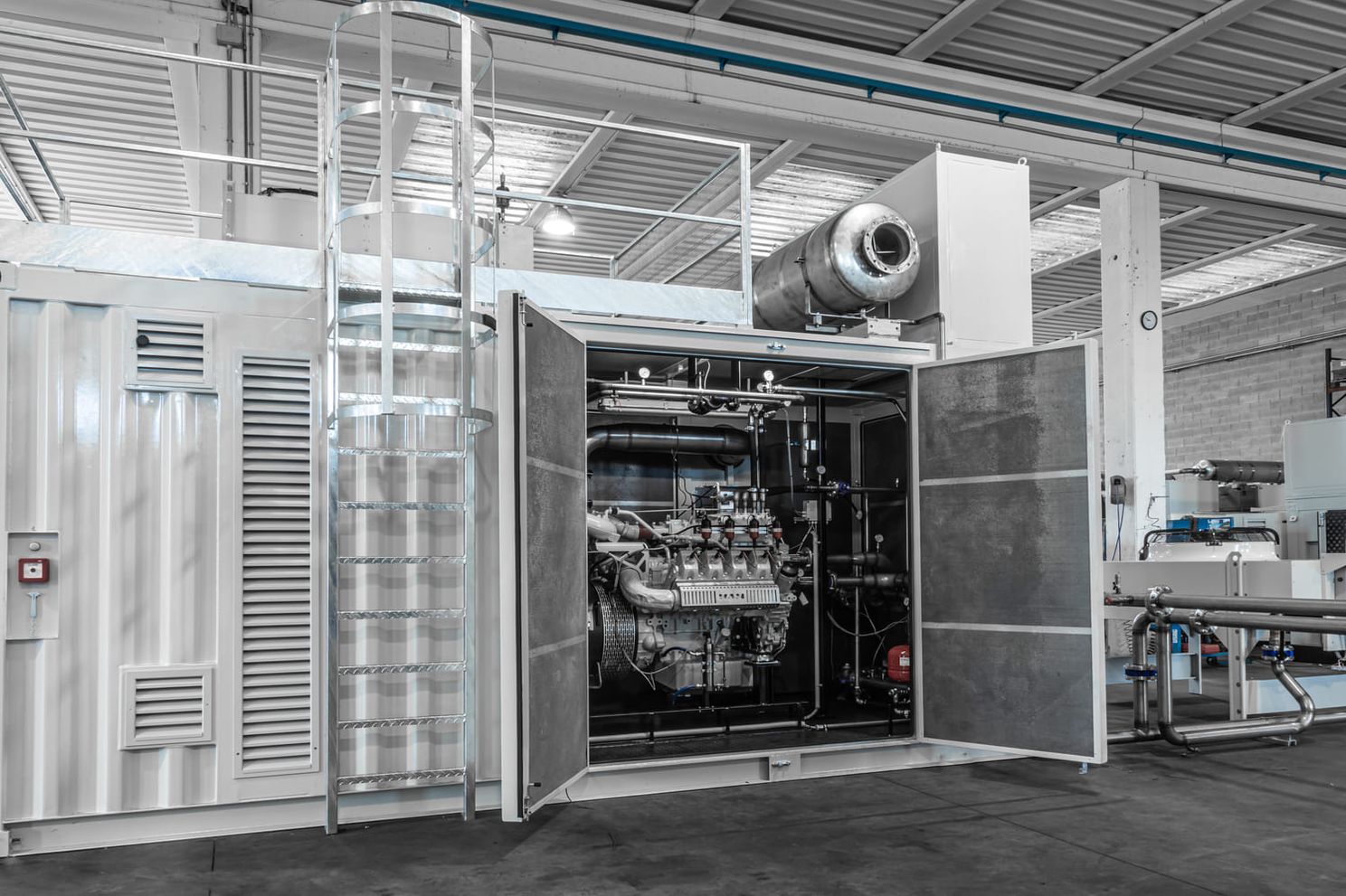
The machine sits in a shed with no light. The process takes eight hours. The plant is installed at a customer's site in Brazil. The product exists only inside a CAD file.

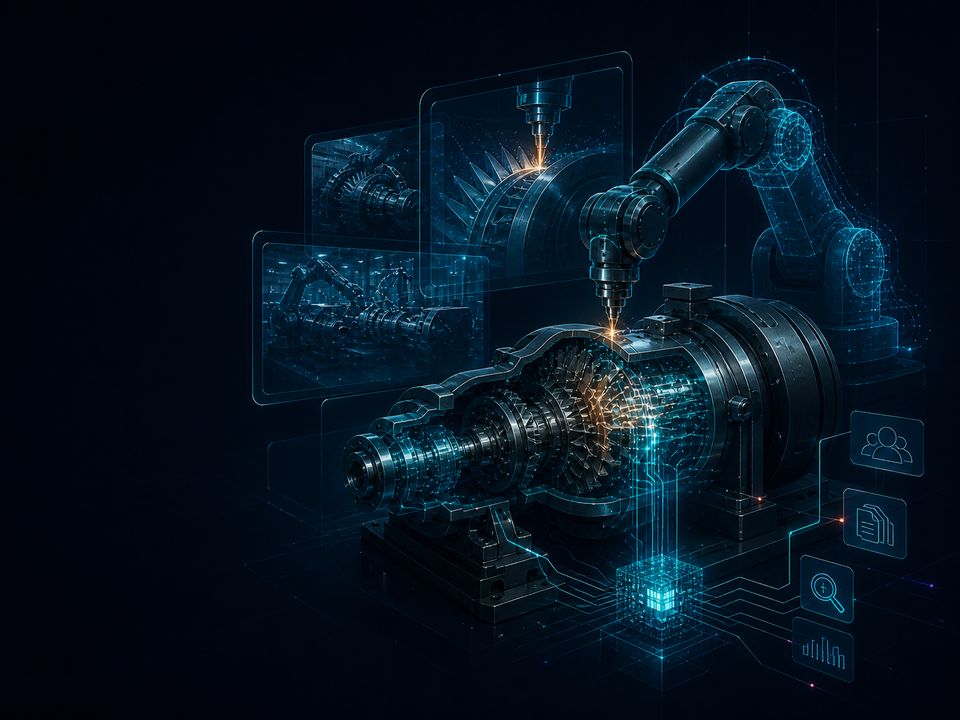
We start from photographs, drawings, 3D models and technical documentation to build images and videos for websites, catalogues, trade fairs, presentations and campaigns. AI, creative direction, post-production and technical checking. In the same project, ideally in the same universe.

Please: no confidential CAD files, trade secrets or NDA-covered material in the public form. For those we set up a dedicated channel.

AI content for industrial B2B marketing
8
process stages, from feasibility to delivery
5
levels of checking before publication
12
types of material we can start from
1
test visuals to define the method
The problem

An extraordinary product. Three crooked photos from 2019

Photographing industry is complicated. It takes sets, lighting, permits, staff, cleaning, machine downtime and a photographer who understands which part of the machine shouldn't look like a toaster.

The problem shows up when you have to redo the website, prepare a catalogue, launch a product or fill a wall at a trade fair.

Those three photos from 2019 suddenly reveal all their personality.

Subjects that cannot be photographed
internal machining
components in motion
microscopic processes
plants installed far away
products still in development
configurations built to order only
dangerous or hard-to-reach environments
variants that are never all in the same plant at once
Our method

We didn't train an industrial genius. We built a process

We don't use a single proprietary model that knows every machine. We combine generative tools, visual references, photographs, CAD, compositing, retouching, editing and creative direction.

The workflow is chosen according to the level of precision required.

AI produces possibilities. We select, correct and build the result.

Then the people who know the product step in

Your engineering department. No visual reaches publication without passing through the people who know how the thing is actually built.

Technical checking isn't optional

An image can be beautiful and have the wrong bolt. That's why validation is a project phase, not a courtesy.

What we make

We make visible what stays outside the frame

01

Machines and plants

Placement in a line, environment, visual cleanup, colour variations, optional components and scenarios that are hard to stage in reality.

When the geometry has to be exact we start from CAD or technical rendering: AI works on environment, light and materials, it doesn't reinvent the product.

02

Sections, exploded views and internal processes

Visualisations showing components, flows and parts not visible from outside. Content designed to explain.

They don't replace construction drawings, certified technical plates or documentation required for maintenance.

03

Machining and processes

Production stages, transformations, material flows and phenomena that are hard to film.

We can show what happens inside a machine, at extreme speeds or on scales invisible to the naked eye, stating when it is a visual reconstruction.

04

Products that don't exist yet

Concept visuals for prototypes, future configurations, variants and products in development. Useful for presentations, pre-sales, feedback and commercial launch.

Selling the future is fine. Photographing it as if it were already in the warehouse, slightly less: that's why the content is identified as a concept.

05

Technical videos and animations

Operating sequences, product videos, process animations and content for trade fairs, websites and sales training.

For operating, maintenance or safety procedures, every step is verified by competent technical staff. A very cinematic video is not automatically a manual.

06

Operators and industrial environments

We can add operators, protective equipment, tools and work contexts.

Postures, PPE, distances and behaviours are checked. AI has a certain tendency to treat fingers as optional; on industrial procedures we prefer to be less creative.

07

Variants and localisations

We adapt the same subject to markets, languages, website and social formats, catalogues, presentations, trade-fair stands, campaigns, distributors and sales networks.

A well-planned production becomes a modular library, not a folder with final_definitive_last_v7.jpg.

What we start from

Bring us what you have

We can work with
professional photographsphotos taken in the plantphone videotechnical drawingsrenderingsCAD and 3D modelsproduct sheetsmanualsmaterial and finish samplescolour codesvisual referencesbrand guidelines
At the start we define three categories
01
What must be represented exactly
02
What can be interpreted
03
What must not appear

That distinction avoids half an hour arguing about the light when the real problem is that the model invented a fitting.

The process

From raw material to a ready library

1 Feasibility and confidentiality

We analyse the subject, the desired result and the level of precision needed. Before receiving sensitive material we define the NDA, permitted tools, transfer, access and file retention.

2 Visual brief

We define audience, channel, style, mood, message, formats and technical information to respect.

3 References

We organise photographs, CAD, materials, proportions, colours and distinctive details. The more precise the reference, the less room we leave for the machine's imagination.

4 Generation and compositing

We produce variants, environments, sequences and compositions with the most suitable tools. When needed, we combine AI generation with rendering, photography, 3D graphics and traditional retouching.

5 Selection and correction

We discard inconsistent proposals and work on the best options. The first generation is a starting point, not a delivery in disguise.

6 Technical validation

The client checks product, process, configuration, safety, terminology and visible details. Observations are collected in a structured way before approval.

7 Post-production and final check

We correct colour, composition, materials, text, logos and formats. We also check any statements about the synthetic or conceptual nature of the content.

8 Delivery

We prepare files in the agreed sizes and formats for print, web, video, presentations and campaigns. The project specifies masters, variants, resolutions, usage rights and any editable files.

When it's worth it

When AI is the right choice. And when it isn't

AI is particularly useful when
the subject is hard to photograph
the plant is far away
many variants are needed
the product isn't available yet
an internal part has to be shown
the content has to be adapted to several markets
a shoot would interrupt production
you want to validate a direction before investing in a set
Photography, CAD or rendering are better when
documentary evidence is needed
the geometry must be certified
a real defect has to be shown
the content accompanies safety procedures
every component must match construction dimensions
the product must be represented without any interpretation
the channel or regulations require real images

We don't defend AI on principle. We choose the method that does the job best.

The advantages

More possibilities. Less logistics

Less production complexity

We can avoid or reduce travel, sets, moving machines and production downtime.

Easier variants

Environments, formats, colours and configurations can be adapted without organising a whole new production each time.

Visualising the invisible

We can explain internal processes, future products and situations that are hard to film.

Consistency

We build a uniform visual language for website, catalogues, trade fairs, campaigns and sales network.

Scalability

Once the workflow is defined, extending the library to other products becomes simpler.

Timings and costs depend on quantity, quality of the initial material, precision required, video, formats and number of revisions. AI can reduce the investment, but it doesn't turn every project into “everything ready tomorrow for fifty euros”.

Technical quality

“It looks real” isn't enough

Visual check

Composition, light, materials, proportions, artefacts and consistency across variants.

Client's technical check

Components, configuration, process, PPE, terminology and anything that requires product knowledge.

Brand check

Logo, colours, tone, style and consistency with the rest of your communication.

Channel check

Resolution, format, aspect ratio, compression, legibility and platform requirements.

Transparency check

Stating that a visual is conceptual, a reconstruction, synthetic or manipulated content when required or appropriate. The client approves the final version before publication.

Confidentiality

If it's under NDA, we don't upload it to the first tool that comes along

Before using confidential files we define
which tools may process them
which accounts and settings are used
whether the data can train general models
who can access the material
where it is stored
when it is deleted
which outputs may be published

When necessary we work with services and settings that exclude the use of company data for general training, within the limits set by the relevant contracts.

In the public form we only ask for non-confidential material. CAD files, drawings and confidential documents are transferred once the secure channel.

Rights and transparency

Can you use it? Do we have to declare it? We decide up front

For every project we check
the commercial terms of the toolsusage rights on the outputsthird-party brands or materialsreal or synthetic peoplethe need for consentlabelling obligationsmetadata required by the channeluse in advertising, catalogues, marketplaces and trade fairsexclusivity on the image

When a visual represents a product that doesn't exist yet or a reconstructed scene, we recommend a clear statement. Transparency stops a very effective image from becoming an unintended commercial promise.

The initial test

We start from one visual. Then we build the library

Before producing dozens of images we recommend a test on a representative subject.

The first visual defines the method. The others shouldn't start each time from a blank page.

Let's assess your subject →
The test serves to check
the quality of the available material
the level of precision achievable
style
revision times
the role of CAD
the validation process
feasibility of later images and videos
The rest of B2B marketing

A nice image alone doesn't sell. It has to land in front of the right person

AI content is the starting point. Then we place it inside an industrial B2B marketing system.

Websites and SEO

We design clear, fast sites built around buyers' searches and questions.

We optimise structure, content, images, video and data for search engines and for the new AI-based experiences, without promising shortcuts or automatic rankings.

Technical and sales documentation

Catalogues, product sheets, presentations, manuals and material for distributors.

Text and visuals are designed together, instead of meeting for the first time the evening before printing.

CRM and sales automation

Discover custom AI and automation →

Content and communication

Technical articles, case studies, newsletters, LinkedIn content and multilingual material.

AI can speed up research, structure and adaptation. Experience, sources and technical review stay human.

Campaigns and lead generation

Discover BOS and the sales network →

Brand design

We build or refresh visual identity, guidelines and graphic system to keep all material consistent.

AI and SEO

Generating a hundred articles in an afternoon is easy. Getting them read is another matter

We don't use AI to fill the site with generic pages built only around keywords.

AI helps to organise, adapt and produce. The value has to come from the company.

Google doesn't reward content because it was generated with AI, and it doesn't penalise it just for that. What counts is that it is accurate, original and useful.

We start from
company experience
technical expertise
verifiable data and sources
real customer questions
application cases
input from engineers and salespeople
Let's talk

Send us an ugly photo. Seriously

Send us an image of the product you'd never use on the website and tell us what you'd like to show.

We'll assess the material, the precision required and the most suitable method. If AI isn't the right solution, we'll propose photography, rendering or a mixed workflow.

Only upload files you are authorised to share and that contain no confidential information. For sensitive material we arrange a dedicated transfer.

Go to the form →

Show us where we start from

Frequently asked questions

Are the generated images realistic?

They can be. Realism, however, doesn't guarantee correctness. That's why selection, post-production and technical validation are part of the process.

Will they be technically correct?

We build the visual using the available references, but the final check belongs to the people who know the product and the process. When geometric precision is needed we use CAD or rendering as a base.

Do we need 3D models or CAD?

Not always. They help a lot when shape, proportions and components have to be precise. For more evocative content, photographs and technical references can be enough.

Can I use the visuals in a catalogue and at a trade fair?

Yes, if the project covers those uses. We prepare resolutions and formats suited to the final sizes. Large-format print feasibility has to be defined before, not after designing everything for Instagram.

Do you also make videos?

Yes. We can create short sequences, product animations, process visuals and trade-fair content. Duration, technical continuity and resolution affect timings and costs.

How much does it cost?

It depends on the number of subjects, the quality of the material, precision, use of CAD, video length, formats and revisions. We recommend starting with a representative test and building the quote on real feasibility.

Does it cost less than a shoot?

It can cost less when it avoids travel, machine downtime, complex sets or many separate productions. For simple, easily photographed subjects, a traditional shoot may be the better choice.

How do you handle confidential material?

We define the NDA, authorised tools, access, retention and deletion up front. Sensitive files must not be uploaded to the public form.

Can we use the outputs commercially?

The contract specifies uses, licences and limits based on the tools and material involved. We also check brands, third-party content and people represented.

Do we have to declare that the content was generated with AI?

It depends on the content, the channel, the market and the use. Concept visuals, synthetic scenes and content that could be mistaken for real events need particular care. We assess it before publication.

Is AI content penalised by Google?

Not because it was generated with AI. It can have problems, though, if it's inaccurate, duplicated, mass-produced or lacking original value. That's why we combine expertise, sources and human review.

Do you still handle traditional B2B marketing too?

Yes. Websites, SEO, CRM, documentation, campaigns, brand, internationalisation and sales development. AI content extends the system, it doesn't replace it.

Related gears

Where the path continues

All services